
Next-Generation Automation in Industrial Textile Finishing: The Shirt Form Finisher and Engineering Vision
In the contemporary manufacturing landscape, the winds of Industry 4.0 are reshaping every facet of production. Textile finishing processes are undergoing a massive digital transformation to meet global demands. Smart automation systems are replacing traditional methods to minimize human error and maximize operational throughput. Within this framework, the Shirt Form Finisher stands out as a masterpiece of mechatronic engineering. These systems, developed with the engineering prowess of Malkan, aim to achieve the perfect form without compromising the structural integrity of the fabric.
Integrating such visionary technology is essential for maintaining quality standards while simultaneously reducing operational costs in a competitive market. The digital transformation journey in textile finishing offers significant opportunities for manufacturers who embrace these advanced mechatronics. Sophisticated sensors and intelligent control units ensure that every garment is treated with the highest level of care. By automating the final touch, brands can guarantee a level of consistency that manual labor simply cannot replicate. For detailed research on global production standards and Industry 4.0 principles, you can review relevant documentation.
1. The Shirt Form Finisher: Mechanical and Thermodynamic Principles
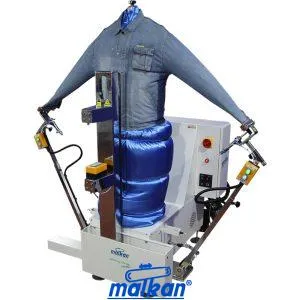
A high-performance Shirt Form Finisher utilizing advanced thermodynamics for industrial garment finishing.
Beyond a simple ironing process, these devices operate based on complex laws of thermodynamics and aerodynamic principles. The Shirt Form Finisher utilizes controlled steam injection to soften textile fibers, immediately followed by a high-volume hot air flow to set the shape. During this process, tension points on the fabric are meticulously balanced using precision sensors and mechanical grippers. Pressure values are adjusted according to the fabric type, such as cotton, linen, or synthetic blends. This optimization is managed by the robot’s internal software intelligence to ensure a flawless finish.
The engineering philosophy behind these systems prioritizes both high performance and fabric longevity. Unlike traditional ironing methods that can cause fiber deformation or “shining” marks, form finishing technology creates a gentle yet effective process. The blowing mannequins are designed using fluid mechanics to significantly reduce the time required for steam to penetrate the fabric. This technological advancement represents a fundamental shift in how modern production facilities approach textile finishing. Achieving uniform heat distribution is critical for ensuring that every inch of the garment is perfectly smooth.
2. Engineering Perspective: Pneumatic Systems and PLC Control Mechanisms
At the heart of the system, PLC (Programmable Logic Controller) units manage each ironing cycle with millisecond precision. The pneumatic pistons and valves within the Shirt Form Finisher ensure that the clamps securing the sleeves and body close with the exact required pressure. Excessive pressure can damage delicate fabrics, while insufficient pressure fails to remove stubborn wrinkles. The algorithms that manage this balance minimize the need for constant operator intervention. This innovation-driven approach allows the machine to adapt instantly to various shirt sizes and cuts, from slim fit to regular fit.
Digital adjustments made via operator panels are precise enough to provide data for corporate efficiency reporting. The integration of thermodynamic principles with smart control systems represents the pinnacle of mechatronic engineering. These advanced control mechanisms ensure consistent quality across thousands of production cycles. The system’s ability to “learn” from previous operations and optimize future performance sets a new standard in apparel finishing automation. For comprehensive technical specifications regarding similar shirt ironing systems, our technical documentation provides detailed engineering data.
3. Production Line Optimization: Time Management and Operational Speed
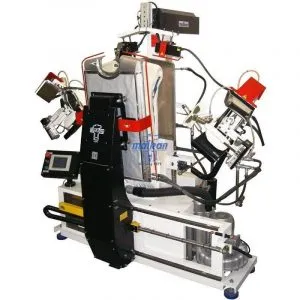
High-speed automated shirt finishing with Malkan form finishing technology.
Time is the most valuable resource in industrial manufacturing. When comparing the time spent by a manual operator to the processing speed of a Shirt Form Finisher, the productivity gap is staggering. These robots can increase hourly production capacity by up to three times compared to traditional hand ironing. Fast cycle times ensure that orders are delivered on time while eliminating bottlenecks in the production line. The blowing mannequins, engineered with fluid dynamics, reduce steam penetration time to mere seconds.
The operational workflow has been carefully analyzed to minimize idle time between cycles. Advanced sensors detect the placement of the garment and automatically initiate the appropriate program sequence. This autonomous operation allows a single operator to manage multiple machines simultaneously. This drastically increases labor efficiency and reduces the labor cost per unit. For large-scale factories, this speed is the key to increasing market share and meeting the demands of “fast fashion” cycles.
4. Ergonomics and Occupational Health: Protecting the Human Factor
Long-term manual ironing in industrial facilities can lead to serious musculoskeletal disorders in workers. Implementing a Shirt Form Finisher redirects human labor from physical strain toward more strategic, oversight-oriented roles. Negative factors such as wrist pain, exposure to high temperatures, and constant standing are eliminated by this technology. As part of our “human-first” vision, the design of these devices prioritizes ergonomic ease. The operator simply places the shirt on the mannequin and starts the process with a button; the robot handles the heavy lifting.
Modern finishing robots feature enclosed designs that prevent direct contact with hot surfaces and steam, creating a safer work environment. This focus on operator well-being translates directly into lower insurance costs and reduced staff turnover. Higher overall productivity is a natural result of a satisfied and healthy workforce. The financial benefits of improved workplace safety often exceed the initial investment in automated systems. To explore similar form finishing solutions for denim, our product catalog offers extensive technical specifications.
5. Sustainability and Energy Efficiency: Ecological Production Standards
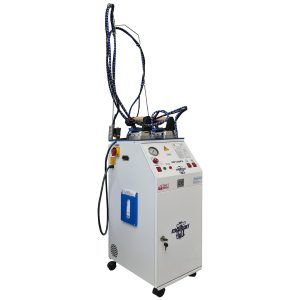
Energy-efficient shirt form finishing with Malkan finishing robot technology.
Rising energy costs and carbon footprint restrictions have made the energy consumption profile of machinery a critical factor. The Shirt Form Finisher delivers maximum performance with minimum energy, thanks to modern insulation techniques and smart steam boilers. Steam recycling systems and heat retention within the machine reduce the amount of waste heat released into the atmosphere. Efficiency-oriented Variable Frequency Drives (VFD) optimize electricity bills by consuming power only when needed.
Protecting the ecological balance has become a corporate responsibility for global brands. Modern finishing robots address these concerns with innovative design features, including reduced water consumption and minimized chemical usage. The ability to document these environmental improvements provides manufacturers with a valuable marketing advantage in an eco-conscious global market. Companies investing in sustainable finishing technology often benefit from green manufacturing incentives and tax advantages. Our commitment to sustainability ensures that our machines are compatible with the “green factory” concept.
6. Application Areas: From Mass Production to Boutique Services
The utility of this technology is not limited to massive garment factories. The Shirt Form Finisher is a preferred choice for five-star hotel laundries, professional dry cleaning chains, and military facilities. In the hospitality sector, guest satisfaction is directly linked to the perfection of textile products. Robotic systems standardize service quality by ensuring every shirt looks “as good as new.” In dry cleaning businesses, the biggest factors in customer loyalty are fast delivery and excellent finishing quality.
The versatility of modern finishing robots allows them to process a wide range of garments beyond standard dress shirts, including blouses and polo shirts. Customizable program settings enable operators to save specific parameters for different product types. This flexibility makes the technology suitable for both high-volume uniform production and specialized boutique finishing services. For upper-body finishing applications, our engineering team provides customized solutions based on your specific production requirements for jacket finishing solutions and pressing benches.
7. Technical Details and Hardware Quality: The Power of Engineering Detail
The durability of the materials used defines the quality of a machine. The Shirt Form Finisher is equipped with stainless steel components and high-temperature resistant specialized fabric covers. Anti-static surfaces prevent delicate fabrics from sticking to the mannequin. Internal wiring systems are heat and moisture protected according to industrial standards. Fan motors are designed with a silent operation principle to minimize noise pollution in the workspace.
Every component has been stress-tested to withstand heavy workloads over many years. This durability is the most important factor in shortening the Return on Investment (ROI) period. The manufacturing process follows strict quality control protocols at every stage. From raw material selection to final assembly, every component is monitored to ensure compliance with international standards. The result is a machine that offers consistent performance even in the most demanding production conditions.
8. Maintenance and Engineering Protocols: Strategies for Long-Life Performance
Like any high-tech product, periodic maintenance of these robots is vital for system continuity. Maintaining a Shirt Form Finisher requires specific discipline and technical knowledge. To extend the life of the machine, several key procedures must be followed:
- Exterior body surfaces should be wiped daily with a soft cloth.
- Limescale buildup in water tanks must be checked periodically.
- Pneumatic hoses should be inspected for air leaks.
- Steam valve seals should be replaced every six months.
- Air filters must be regularly cleared of accumulated dust.
- Moving mechanical joints should be lubricated with manufacturer-recommended oils.
- PLC software updates should be checked by authorized technical services.
- Heat sensors must be calibrated at regular intervals.
- The tightness of electrical connection terminals should be checked annually.
- The functionality of emergency stop buttons must be tested every morning.
The chemicals used in maintenance must not damage the machine components. Limescale is the greatest enemy of steam-powered systems; therefore, the use of demineralized water is highly recommended. Regular maintenance not only prevents breakdowns but also keeps the machine’s energy efficiency at its peak. Implementing a systematic maintenance program with proper documentation ensures that warranty coverage remains valid and potential issues are identified before they cause downtime.
9. The Future of Innovation and Expectations in the Textile Sector
In the future, it is easy to predict that Shirt Form Finisher technology will become even more integrated with Artificial Intelligence. Robots that analyze fabric thickness and moisture levels using camera systems will be able to change ironing parameters in real-time. Thanks to the Internet of Things (IoT), machines will be able to notify technical services of potential failure risks (predictive maintenance) and upload production data to cloud systems. Being part of this digital ecosystem is not just a modernization for textile manufacturers; it is a survival strategy.
The integration of machine learning algorithms will allow these systems to continuously improve their performance based on historical data. As more garments are processed, the system will become more efficient at recognizing patterns and optimizing parameters for specific fabric types. This continuous improvement cycle ensures that the technology remains relevant and effective throughout its operational life. Future generations of these robots will create truly smart finishing departments that require minimal human supervision while delivering maximum quality and efficiency.
10. Conclusion: An Authoritative Investment Decision
In conclusion, investing in a Shirt Form Finisher is a strategic move that transforms an enterprise’s operational capacity. When parameters like engineering intelligence, energy savings, workplace safety, and standardized quality come together, manual ironing cannot compete with this technology. For any facility looking to increase corporate prestige, achieve error-free production, and perform finishing at global standards, these robots are central. Using the opportunities provided by technology most efficiently is the first step toward taking a leading role in the future of textiles.
The decision to automate should be based on a thorough analysis of current operations and projected growth. For most facilities, the ROI for form finishing robots ranges from 12 to 24 months, depending on production volume. After this period, the system continues to deliver pure profit through reduced labor costs and improved quality consistency. Competitive advantages gained through automation often open doors to new markets and higher-margin product categories.
11. Frequently Asked Questions (FAQ)
Which fabric types are suitable for a Shirt Form Finisher? These robots can be safely used on all types of shirts made from 100% cotton, linen, polyester, viscose, and various blended fabrics. Pressure and steam settings can be adjusted manually or automatically for delicate fabrics.
What is the average daily production capacity of the device? While capacity varies based on the operator’s speed and the shirt model, a standard Shirt Form Finisher has the capability to finish 40 to 60 shirts per hour at professional quality.
What should be the main focus during maintenance processes? The most critical point is the prevention of limescale. Water quality should be monitored for the efficiency of the steam system, and air outlet ducts should be cleaned regularly to prevent the machine from overheating.
How does form finishing technology differ from traditional ironing? Unlike traditional contact ironing, Shirt Form Finisher technology uses air pressure and steam without direct contact to shape the garment. This eliminates the risk of shine marks, fabric distortion, and damage to buttons or embellishments. The result is a natural smoothness that preserves the original texture and appearance of the fabric.
Transform Your Production with Malkan Finishing Robot Technology
For detailed technical specifications, energy efficiency calculations, and ROI analysis for your specific production requirements, please review our technical documents. Our engineering team provides customized system configurations tailored to your facility’s unique needs.
Contact our expert engineers today to schedule a delivery assessment and discover how Malkan finishing robot technology can revolutionize your apparel finishing operations. We offer comprehensive training programs and ongoing technical support for optimum system performance.
Get Technical Information →Follow us on social media:
Resources and Detailed Information
- • Wikipedia – Industry 4.0 – Fundamental principles of smart manufacturing systems https://en.wikipedia.org/wiki/Industry_4.0
- • Wikipedia – Thermodynamics – Fundamental laws of energy and heat transfer science https://en.wikipedia.org/wiki/Thermodynamics
- • Shirt Ironing Systems – Comprehensive shirt ironing solutions and form finishing robots https://malkan.com.tr/en/urun-kategori/garment-and-ready-wear/shirt-ironing-systems/
- • Jacket Finishing Systems – Jacket finishing solutions and pressing benches https://malkan.com.tr/en/urun-kategori/garment-and-ready-wear/jacket-finishing-presses-and-benches/
- • Denim Ironing Systems – Complete denim finishing solutions https://malkan.com.tr/en/urun-kategori/garment-and-ready-wear/jeans-jeans-ironing-systems/